Memory of Sun
Memory of sun seeps from the heart.
Grass grows yellower.
Faintly if at all the early snowflakes
Hover, hover.
Water becoming ice is slowing in
The narrow channels.
Nothing at all will happen here again,
Will ever happen.
Against the sky the willow spreads a fan
The silk's torn off.
Maybe it's better I did not become
Your wife.
Memory of sun seeps from the heart.
What is it? -- Dark?
Perhaps! Winter will have occupied us
In the night.
Anna Akhmatova


1.17.2007
Memoir, autobiography, fact fiction: What's the diff?
I ran across this article, which raises some interesting literary questions.
How do we differentiate between:
Memoir
Autobiography
Autobiographical fiction
Roman a clef
Nonfiction novels
…and do we need to?
Frankly, I don’t care which genre a work falls into, but it is vitally important to me to have a work presented in a “truthful” light, in terms of the relationship between the author and the content. This ties in with the concept of plagiarism: When authors present their work as one genre when it really is another, they are being fraudulent.
To take a recent example: James Frey and his Million Little Pieces was presented by him (and his publisher) as fact; we now know he took wholesale liberties with the truth. Thus, the book cannot be called a memoir. And it is a fraudulent presentation to the readership. His story, with his sad little embellishments (come on, did anyone really believe a dentist would administer root canal treatment with no sedation? Really!) would not have been as compelling if presented as fiction. But I do think his story without the pathetic dramatization would have been just fine as a memoir.
The lines are fine, but they are lines nevertheless. We need to differentiate between memoir (a particularized focus on memories, feelings and recollections) and autobiography (recalling one’s own life and times), between a roman a clef (telling the tale the way the author would have liked it to have gone) and autobiographical fiction (a novel based on the life of the author). Readers and writers need to be able to make the distinction between “fact” and “remembered fact”, “fiction” and “fictionalized biography.” Maybe some books straddle the line (is The Bell Jar autobiographical fiction, roman a clef, or both?), but even these books should be measured against some sort of literary parameters.
For some reason (perhaps the high premium we place on entertainment?), we are a society that tolerates the stretching of truth, misinformation, straw-man arguments, and plain old flying in the face of scientific fact – particularly in the guises of verbal arguments. Maybe we simply don’t have the critical faculty to be able to separate wheat from chaff. The James Frey affair, among other recent literary brouhahas, makes me think we still hold the printed word to a higher standard than we accept from our politicians or corporate executives. I think that’s a good sign. It’s a starting place, anyway.
How do we differentiate between:
Memoir
Autobiography
Autobiographical fiction
Roman a clef
Nonfiction novels
…and do we need to?
Frankly, I don’t care which genre a work falls into, but it is vitally important to me to have a work presented in a “truthful” light, in terms of the relationship between the author and the content. This ties in with the concept of plagiarism: When authors present their work as one genre when it really is another, they are being fraudulent.
To take a recent example: James Frey and his Million Little Pieces was presented by him (and his publisher) as fact; we now know he took wholesale liberties with the truth. Thus, the book cannot be called a memoir. And it is a fraudulent presentation to the readership. His story, with his sad little embellishments (come on, did anyone really believe a dentist would administer root canal treatment with no sedation? Really!) would not have been as compelling if presented as fiction. But I do think his story without the pathetic dramatization would have been just fine as a memoir.
The lines are fine, but they are lines nevertheless. We need to differentiate between memoir (a particularized focus on memories, feelings and recollections) and autobiography (recalling one’s own life and times), between a roman a clef (telling the tale the way the author would have liked it to have gone) and autobiographical fiction (a novel based on the life of the author). Readers and writers need to be able to make the distinction between “fact” and “remembered fact”, “fiction” and “fictionalized biography.” Maybe some books straddle the line (is The Bell Jar autobiographical fiction, roman a clef, or both?), but even these books should be measured against some sort of literary parameters.
For some reason (perhaps the high premium we place on entertainment?), we are a society that tolerates the stretching of truth, misinformation, straw-man arguments, and plain old flying in the face of scientific fact – particularly in the guises of verbal arguments. Maybe we simply don’t have the critical faculty to be able to separate wheat from chaff. The James Frey affair, among other recent literary brouhahas, makes me think we still hold the printed word to a higher standard than we accept from our politicians or corporate executives. I think that’s a good sign. It’s a starting place, anyway.
1.16.2007
More on My Uncle Napoleon
I feel behind in everything lately. Think I am going through another mid-life crisis. Does anyone have any recommended reading (no Gail Sheehy, please!) to remedy such matters? I know men go out and buy motorcycles and have affairs with young women...what are women supposed to do?
Anyway, despite the machinations of aging, I am making progress on My Uncle Napoleon -- only a hundred more pages to go! According to the Kirkus Review, the book is about an "extended family, living within and around a walled enclave in Tehran in the early 1940s---and specifically of said family's domination by its Dear Uncle Napoleon (the portentous rubric by which its fussbudget megalomaniac despot is addressed) as observed and recorded by Uncle's unnamed nephew, whose idealistic love for his beautiful cousin Layli forms one of the two major plotlines here. The other is Uncle's paranoid conviction that all evil flows from his country's ill-advised friendliness with foreign nations, especially Great Britain (the story is set at a time when England and Russia separately schemed to control Iran's oil resources, and preferential trade status was granted the hated British by an impoverished national treasury)."
It is an interesting book, which I first found very humorous and now slightly less so. It is a marvel of plot and dialogue...here is just a sample of a scene to give you an idea, with more to come when I finish:
Mash Qasem had picked the ladder up from its place before Dear Uncle's order was given. Those present didn't for a moment take their eyes off the form of Dustali Khan, which was shaking on the roof like a nocturnal phantom. Mash Qasem leaned the ladder against the wall, and went up it a few rungs to help Dustali Khan come down.
A few moments later Dustali Khan put his feet on the ground and fainted in Mash Qasem's arms.
They more or less dragged him over to the carpets and laid him down. Everyone started discussing what had happened and offering opinions as to what it meant.
Dear Uncle Napoleon kept lightly slapping him on the face with the palm of his hand and asking,
"Dustali Khan, what is it? What happened?"
But Dustali Khan, with his dishevelled hair, in his shirt and white, mud-stained longjohns, lay there motionless, with only his lips trembling. We were all gathered in a circle around him.
Mash Qasem, who was massaging Dustali Khan's feet, said, "It's like a snake's bit him some place."
Dear Uncle threw an angry look at him, "You're talking rubbish again!"
"Well sir, why should I lie? There was a man in our town who . . ."
"The hell with you and the man in your town. Will you let me see what's happened?" And then
once again he gently slapped Dustali across the face.
Dustali Khan opened his eyes. Suddenly he seemed to come back to himself and looked from one side to the other. With a nervous movement he clasped both hands to his groin and shouted,
"Cut . . . it's been cut . . ."
"Who's cut? What's been cut?"
Dustali Khan didn't answer Dear Uncle's question but in the same terrified voice repeated, "Cut . . . she wanted to cut it . . . with a knife . . . with a kitchen knife . . . she was going to cut . . ."
"Who cut? Who wanted to cut?"
"Aziz . . . that rotten bitch Aziz . . . my wife . . . that witch of a woman . . . that unnatural bitch of a murderer . . ."
Asadollah Mirza, who had pricked up his ears, came forward, holding back his laughter with some difficulty. "Moment . . . moment . . . wait . . . wait, let me see . . . God forbid, Mrs. Aziz al-Saltaneh didn't want to cut off your . . ."
"Yes, yes . . . that witch, if I'd jumped a moment later she'd have cut it off."
Asadollah Mirza burst out with a loud guffaw of laughter and said, "Right from the bottom?"
As everyone laughed Dear Uncle Napoleon suddenly remembered that there were women and children present. He stood up and, stretching out his arms wide on each side and so making a curtain with his cloak between Dustali Khan and the children, he shouted, "Women and children over there!"
Now, in my view, that is a funny and well-handled scene in dialogue. In a few short paragraphs, even the casual reader glimpses the various characters: feckless Dustali Khan, imperious Uncle Napoleon, naive Mash Qasem, sophisticated Asadollah Mirza and the shrewish wife, Aziz al-Saltaneh. The author keeps this up throughout the novel, scene after scene, thickening the plot as he goes along. However, about 3/4 of the way in, I find that the scenes are starting to be more repetitive, versus enlightening or deepening, and therefore less engaging.
There are also some cultural differences that affect my reading; for example, Dustali Khan is the apparent father of his stepdaughter's future child, a fact that is treated satirically in the novel and which doesn't seem terribly funny to me, in any shape or form. I hope to write more about this aspect, but I do want to finish the novel and also think through specifics. So, onward!
Anyway, despite the machinations of aging, I am making progress on My Uncle Napoleon -- only a hundred more pages to go! According to the Kirkus Review, the book is about an "extended family, living within and around a walled enclave in Tehran in the early 1940s---and specifically of said family's domination by its Dear Uncle Napoleon (the portentous rubric by which its fussbudget megalomaniac despot is addressed) as observed and recorded by Uncle's unnamed nephew, whose idealistic love for his beautiful cousin Layli forms one of the two major plotlines here. The other is Uncle's paranoid conviction that all evil flows from his country's ill-advised friendliness with foreign nations, especially Great Britain (the story is set at a time when England and Russia separately schemed to control Iran's oil resources, and preferential trade status was granted the hated British by an impoverished national treasury)."
It is an interesting book, which I first found very humorous and now slightly less so. It is a marvel of plot and dialogue...here is just a sample of a scene to give you an idea, with more to come when I finish:
Mash Qasem had picked the ladder up from its place before Dear Uncle's order was given. Those present didn't for a moment take their eyes off the form of Dustali Khan, which was shaking on the roof like a nocturnal phantom. Mash Qasem leaned the ladder against the wall, and went up it a few rungs to help Dustali Khan come down.
A few moments later Dustali Khan put his feet on the ground and fainted in Mash Qasem's arms.
They more or less dragged him over to the carpets and laid him down. Everyone started discussing what had happened and offering opinions as to what it meant.
Dear Uncle Napoleon kept lightly slapping him on the face with the palm of his hand and asking,
"Dustali Khan, what is it? What happened?"
But Dustali Khan, with his dishevelled hair, in his shirt and white, mud-stained longjohns, lay there motionless, with only his lips trembling. We were all gathered in a circle around him.
Mash Qasem, who was massaging Dustali Khan's feet, said, "It's like a snake's bit him some place."
Dear Uncle threw an angry look at him, "You're talking rubbish again!"
"Well sir, why should I lie? There was a man in our town who . . ."
"The hell with you and the man in your town. Will you let me see what's happened?" And then
once again he gently slapped Dustali across the face.
Dustali Khan opened his eyes. Suddenly he seemed to come back to himself and looked from one side to the other. With a nervous movement he clasped both hands to his groin and shouted,
"Cut . . . it's been cut . . ."
"Who's cut? What's been cut?"
Dustali Khan didn't answer Dear Uncle's question but in the same terrified voice repeated, "Cut . . . she wanted to cut it . . . with a knife . . . with a kitchen knife . . . she was going to cut . . ."
"Who cut? Who wanted to cut?"
"Aziz . . . that rotten bitch Aziz . . . my wife . . . that witch of a woman . . . that unnatural bitch of a murderer . . ."
Asadollah Mirza, who had pricked up his ears, came forward, holding back his laughter with some difficulty. "Moment . . . moment . . . wait . . . wait, let me see . . . God forbid, Mrs. Aziz al-Saltaneh didn't want to cut off your . . ."
"Yes, yes . . . that witch, if I'd jumped a moment later she'd have cut it off."
Asadollah Mirza burst out with a loud guffaw of laughter and said, "Right from the bottom?"
As everyone laughed Dear Uncle Napoleon suddenly remembered that there were women and children present. He stood up and, stretching out his arms wide on each side and so making a curtain with his cloak between Dustali Khan and the children, he shouted, "Women and children over there!"
Now, in my view, that is a funny and well-handled scene in dialogue. In a few short paragraphs, even the casual reader glimpses the various characters: feckless Dustali Khan, imperious Uncle Napoleon, naive Mash Qasem, sophisticated Asadollah Mirza and the shrewish wife, Aziz al-Saltaneh. The author keeps this up throughout the novel, scene after scene, thickening the plot as he goes along. However, about 3/4 of the way in, I find that the scenes are starting to be more repetitive, versus enlightening or deepening, and therefore less engaging.
There are also some cultural differences that affect my reading; for example, Dustali Khan is the apparent father of his stepdaughter's future child, a fact that is treated satirically in the novel and which doesn't seem terribly funny to me, in any shape or form. I hope to write more about this aspect, but I do want to finish the novel and also think through specifics. So, onward!
1.12.2007
Plagiarism: It's a lot of hard work
Here's an interesting (if flawed) article from Slate on plagiarism. The article by Meghan O'Rourke quotes from a new study on the phenomenon, The Little Book of Plagiarism by law professor and Judge Richard A. Posner.
O'Rourke seems to conclude from Posner and other sources that the reason we (Americans versus anyone else, who presumably either don't care or care for different reasons about plagiarism) have issues with copycats is their compromised work ethic:
The cribbed student essay—which Posner views as a particularly insidious form of plagiarism, committed by approximately one-third of high-school and college students—isn't an academic crime because a C student has tried to pass himself as a Matthew Arnold in the making. It's an academic crime because the student who buys his thesis from a paper mill has shirked the labor that his fellow students actually perform.
Um, no, sorry: It bugs me that anyone, C student or Honor Roll star, would try to pass himself off as a Matthew Arnold in the making. Yes, the fact that the plagiarizer hasn't done the work is certainly partly why I consider it unethical, but what about the fact that the person is trying to portray a thought or idea as his own when, in fact, it is not?
The argument that shirking is more of an issue than fraud seems to me to say more about how our workaholic society is shaping our ethics than about authors who copy other author's sentences. Are we really so impoverished of ideas that we believe original thinking is an impossibility, and that plagiarism is inevitable (therefore, crediting someone else for their work becomes more key than the fact that the idea is ripped off)? Do we so worship blood and sweat that we value the measurement of these sacred liquids we pour into an activity versus the quality or originality of the work itself? Maybe Ian McEwan spent a lot of time finding the exact sentences he copied in Atonement: Shouldn't that count?
And, are the ubiquitous "we" really obsessed with the act of plagiarism itself, or are we just pissed off about the fact that we got duped?
O'Rourke seems to conclude from Posner and other sources that the reason we (Americans versus anyone else, who presumably either don't care or care for different reasons about plagiarism) have issues with copycats is their compromised work ethic:
The cribbed student essay—which Posner views as a particularly insidious form of plagiarism, committed by approximately one-third of high-school and college students—isn't an academic crime because a C student has tried to pass himself as a Matthew Arnold in the making. It's an academic crime because the student who buys his thesis from a paper mill has shirked the labor that his fellow students actually perform.
Um, no, sorry: It bugs me that anyone, C student or Honor Roll star, would try to pass himself off as a Matthew Arnold in the making. Yes, the fact that the plagiarizer hasn't done the work is certainly partly why I consider it unethical, but what about the fact that the person is trying to portray a thought or idea as his own when, in fact, it is not?
The argument that shirking is more of an issue than fraud seems to me to say more about how our workaholic society is shaping our ethics than about authors who copy other author's sentences. Are we really so impoverished of ideas that we believe original thinking is an impossibility, and that plagiarism is inevitable (therefore, crediting someone else for their work becomes more key than the fact that the idea is ripped off)? Do we so worship blood and sweat that we value the measurement of these sacred liquids we pour into an activity versus the quality or originality of the work itself? Maybe Ian McEwan spent a lot of time finding the exact sentences he copied in Atonement: Shouldn't that count?
And, are the ubiquitous "we" really obsessed with the act of plagiarism itself, or are we just pissed off about the fact that we got duped?
1.08.2007
What are you optimistic about and why?
I like this: What are you optimistic about and why?
And I think this is interesting; may have to check out his book.
GARY MARCUS
Psychologist, New York University; Author, The Birth of the Mind
Metacognition For Kids
We can use the discoveries of cognitive science to improve the quality of education in the US and abroad. To do this, however, we need to radically rethink how our schools work. Going back to the Industrial Revolution, the main emphasis as been on memorization, force-feeding our children with bite-sized morsels that are easily memorize—and quickly forgotten. (Recall the words of Dickens' stern schoolmaster Mr. Gradgrind, "Now, what I want is, Facts. Teach these boys and girls nothing but Facts... Plant nothing else, and root out everything else.") I am not sure it ever served a purpose for children to memorize the capitals of all 50 states (as I failed to do in junior high school), but in the age of Google, continued emphasis on memorization is surely largely a waste of time.
Five decades of cognitive science have taught us that humans are not particularly good memorizers—but also that we as a species have bigger fish to fry. Hamlet famously marveled that humans were "noble in reason", "infinite in faculty", but experimental psychologists like Daniel Kahneman and the late Amos Tversky have shown that humans are actually often poor reasoners, easily fooled. The average person tends to have a shaky grasp on logic, to believe a lot of what he (or she) hears unreflectively, and to be overly confident in his (or her) own beliefs. We tend to be easily fooled by vivid examples, and to notice data that support our theories—whilst forgetting about or ignoring data that go against our theories. Yet I cannot recall a single high school class on informal arguments, how to spot fallacies, or how to interpret statistics; it wasn't until college that anybody explained to me the relation between causation and correlation. In the age of the internet, our problem is not that children can't find information, but that they can't evaluate it.
What children of today need is not so much a large stock of readily Googleable information as a mental toolkit for parsing what they hear and read. As the old saying goes, it is better to teach a man how to fish than to simply give him fish; the current curriculum largely gives children fish, without teaching them a thing about how to fish for themselves.
How to teach children to fish for themselves? I would start with a course in what cognitive scientists call metacognition, knowing about knowing, call it The Human Mind: A User's Guide, aimed at say, seventh-graders.. Instead of emphasizing facts, I'd expose students to the architecture of the mind, what it does well, and what it doesn't. And most important, how to cope with its limitations, to consider evidence in a more balanced way, to be sensitive to biases in our reasoning, and to make choices in ways that better suit our own long-term goals. Nobody ever taught me about these things in middle school (or even high school), but there's no reason why they couldn't be taught; in time, I expect they will.
And I think this is interesting; may have to check out his book.
GARY MARCUS
Psychologist, New York University; Author, The Birth of the Mind
Metacognition For Kids
We can use the discoveries of cognitive science to improve the quality of education in the US and abroad. To do this, however, we need to radically rethink how our schools work. Going back to the Industrial Revolution, the main emphasis as been on memorization, force-feeding our children with bite-sized morsels that are easily memorize—and quickly forgotten. (Recall the words of Dickens' stern schoolmaster Mr. Gradgrind, "Now, what I want is, Facts. Teach these boys and girls nothing but Facts... Plant nothing else, and root out everything else.") I am not sure it ever served a purpose for children to memorize the capitals of all 50 states (as I failed to do in junior high school), but in the age of Google, continued emphasis on memorization is surely largely a waste of time.
Five decades of cognitive science have taught us that humans are not particularly good memorizers—but also that we as a species have bigger fish to fry. Hamlet famously marveled that humans were "noble in reason", "infinite in faculty", but experimental psychologists like Daniel Kahneman and the late Amos Tversky have shown that humans are actually often poor reasoners, easily fooled. The average person tends to have a shaky grasp on logic, to believe a lot of what he (or she) hears unreflectively, and to be overly confident in his (or her) own beliefs. We tend to be easily fooled by vivid examples, and to notice data that support our theories—whilst forgetting about or ignoring data that go against our theories. Yet I cannot recall a single high school class on informal arguments, how to spot fallacies, or how to interpret statistics; it wasn't until college that anybody explained to me the relation between causation and correlation. In the age of the internet, our problem is not that children can't find information, but that they can't evaluate it.
What children of today need is not so much a large stock of readily Googleable information as a mental toolkit for parsing what they hear and read. As the old saying goes, it is better to teach a man how to fish than to simply give him fish; the current curriculum largely gives children fish, without teaching them a thing about how to fish for themselves.
How to teach children to fish for themselves? I would start with a course in what cognitive scientists call metacognition, knowing about knowing, call it The Human Mind: A User's Guide, aimed at say, seventh-graders.. Instead of emphasizing facts, I'd expose students to the architecture of the mind, what it does well, and what it doesn't. And most important, how to cope with its limitations, to consider evidence in a more balanced way, to be sensitive to biases in our reasoning, and to make choices in ways that better suit our own long-term goals. Nobody ever taught me about these things in middle school (or even high school), but there's no reason why they couldn't be taught; in time, I expect they will.
1.07.2007
New Author Month - Margaret Atwood
Yes, it's official: I am biting off more than I can chew, eat and digest, book-wise. But I'm trying to challenge myself. I am making very slow progress on My Uncle Napoleon, being only a third through the 500-page book. And I just started an Anne Boleyn bio that is incredibly interesting. AND I signed up for a course on two Faulkner novels, which (if enrollment goes through and course isn't canceled) starts tomorrow night.
With all of that, I still intend to stick to my plan as January being New Author Month. I could take the easy way out and use My Uncle Napoleon's author, Iraj Pezeshkzad, as my "new author." But the goal wasn't just to read an author I hadn't read before; I wanted to read a prominent author I feel as a Literate Kitten (read: Educated and Sophisticated Reader) I should read. Thanks to several blogger recommendations, I decided to go with Margaret Atwood and her novel Cat's Eye. As part of my dedicated reading to my chosen "New Author," I hope to explore some essays and critique of her work.
Okay, I haven't started it yet, but it's only the first week of January. As long as I start it in January, it will count.
First, though, must finish My Uncle Napolean. This is quite a fun romp, with lots of characters and drama and satire. The novel kicks off with the unnamed narrator, a 13-year-old boy living in Iran, falling madly in love with the young daughter of the strict and pompous family patriarch -- Dear Uncle Napolean, so-called because of his excessive admiration of France's military leader. Not many affairs, puppy-love or otherwise, are attested to so eloquently:
One hot summer day, to be precise on Friday the thirteenth of August, at about a quarter to three in the afternoon, I fell in love. The bitterness and longing I've been through since have often made me wonder whether if it had been the twelfth of the fourteenth of August things would have turned out differently.
How could I put down a novel that starts with THAT?
More as I near the finish line...
With all of that, I still intend to stick to my plan as January being New Author Month. I could take the easy way out and use My Uncle Napoleon's author, Iraj Pezeshkzad, as my "new author." But the goal wasn't just to read an author I hadn't read before; I wanted to read a prominent author I feel as a Literate Kitten (read: Educated and Sophisticated Reader) I should read. Thanks to several blogger recommendations, I decided to go with Margaret Atwood and her novel Cat's Eye. As part of my dedicated reading to my chosen "New Author," I hope to explore some essays and critique of her work.
Okay, I haven't started it yet, but it's only the first week of January. As long as I start it in January, it will count.
First, though, must finish My Uncle Napolean. This is quite a fun romp, with lots of characters and drama and satire. The novel kicks off with the unnamed narrator, a 13-year-old boy living in Iran, falling madly in love with the young daughter of the strict and pompous family patriarch -- Dear Uncle Napolean, so-called because of his excessive admiration of France's military leader. Not many affairs, puppy-love or otherwise, are attested to so eloquently:
One hot summer day, to be precise on Friday the thirteenth of August, at about a quarter to three in the afternoon, I fell in love. The bitterness and longing I've been through since have often made me wonder whether if it had been the twelfth of the fourteenth of August things would have turned out differently.
How could I put down a novel that starts with THAT?
More as I near the finish line...
1.05.2007
Seen reading

Seen reading on 1/4/07, 5:45 p.m. (PST), E bus (San Francisco to Caldecott Lane)
Daniel Mason, A Far Country
Edith Wharton, Age of Innocence
Elmore Leonard, When the Women Come Out to Dance (Stories)
Daniel Mason, A Far Country
Edith Wharton, Age of Innocence
Elmore Leonard, When the Women Come Out to Dance (Stories)
1.04.2007
Thoughts for Thursday - less-than-articulate musings
Upon being catapulted unceremoniously into 2007, I’ve reflected on my past year of reading and litblogging, both of which have been illuminating in unexpected ways.
For one thing, I have a greater understanding of my reading tastes and patterns. I love nonfiction and enjoy it in great mouthfuls, like eating popcorn. Fiction, however, is like eating a seven-course, gourmet meal: I need to savor each morsel. Unlike nonfiction, which I pick up and put down whenever I feel like reading, I prefer to read fiction when there is no distraction. Hence, I read fiction at a much slower pace than nonfiction and need to set time aside for my fiction reading, if I want to make any progress in it. Maybe this isn’t a new and brilliant insight, for me or anyone else, but there’s something to be said for making an assumption a fact.
The other thing I’ve learned is that I tend to use archaic words, such as “hence” and “alas” and “hail” in my blog entries. Maybe this penchant for antiquated punch words derives from my preoccupation with all things Tudor.
And why do I use exclamation points, especially in my comments to other blog posts? I would never allow effusive punctuation to creep into my professional or fiction writing.
Only one question remains: Will I curtail these bad grammatical habits in 2007? Dunno! Heretofore, this seemed unlikely. Thence, looks like it may continue.
For one thing, I have a greater understanding of my reading tastes and patterns. I love nonfiction and enjoy it in great mouthfuls, like eating popcorn. Fiction, however, is like eating a seven-course, gourmet meal: I need to savor each morsel. Unlike nonfiction, which I pick up and put down whenever I feel like reading, I prefer to read fiction when there is no distraction. Hence, I read fiction at a much slower pace than nonfiction and need to set time aside for my fiction reading, if I want to make any progress in it. Maybe this isn’t a new and brilliant insight, for me or anyone else, but there’s something to be said for making an assumption a fact.
The other thing I’ve learned is that I tend to use archaic words, such as “hence” and “alas” and “hail” in my blog entries. Maybe this penchant for antiquated punch words derives from my preoccupation with all things Tudor.
And why do I use exclamation points, especially in my comments to other blog posts? I would never allow effusive punctuation to creep into my professional or fiction writing.
Only one question remains: Will I curtail these bad grammatical habits in 2007? Dunno! Heretofore, this seemed unlikely. Thence, looks like it may continue.
1.02.2007
Months of reading for 2007
All hail to you, dear Bloggers, as we head into a brand new year of books, books, books!
This year I am trying to avoid the approach of "chasing my tail" with books -- you know the drill: hearing about a new book and immediately setting off the read it while simultaneously dropping or halfheartedly finishing a current book. Or (worse, in my view) starting too many projects (such as my goal to read through Proust, read Middle Eastern fiction and join in some blog reading challenges or groups, read new genres) and neglecting some or all.
Hence, I am planning my year of reading by month. The goal is to structure reading yet allow room for flexbility while covering coveted reading goals (such as reading the classics or essays). That is a mouthful, but I hope you get my drift. I'll report my progress, such as it may be, as the year progresses.
Here is the outline I've developed:
January – New Author Month
February – Romance is in the Air
March – Exploring Essays
April – Read a Classic Month
May – New in the Stacks
June – Summer Solstice Reading Month
July – Neglected Books Month
August – Dog Days of Nonfiction
September – RIP Challenge
October – RIP Challenge
November – Pick a Genre, Any Genre
December – Winter Solstice Short Story Month
In addition to the above, I intend to continue with the Proust Project and my Middle Eastern Fiction reading, plus add in any other books that I can fit in or which tickle my fancy. I'll report on my "New Author Month" this week.
Until then, here's to Happy Booking & Blogging in the New Year!
This year I am trying to avoid the approach of "chasing my tail" with books -- you know the drill: hearing about a new book and immediately setting off the read it while simultaneously dropping or halfheartedly finishing a current book. Or (worse, in my view) starting too many projects (such as my goal to read through Proust, read Middle Eastern fiction and join in some blog reading challenges or groups, read new genres) and neglecting some or all.
Hence, I am planning my year of reading by month. The goal is to structure reading yet allow room for flexbility while covering coveted reading goals (such as reading the classics or essays). That is a mouthful, but I hope you get my drift. I'll report my progress, such as it may be, as the year progresses.
Here is the outline I've developed:
January – New Author Month
February – Romance is in the Air
March – Exploring Essays
April – Read a Classic Month
May – New in the Stacks
June – Summer Solstice Reading Month
July – Neglected Books Month
August – Dog Days of Nonfiction
September – RIP Challenge
October – RIP Challenge
November – Pick a Genre, Any Genre
December – Winter Solstice Short Story Month
In addition to the above, I intend to continue with the Proust Project and my Middle Eastern Fiction reading, plus add in any other books that I can fit in or which tickle my fancy. I'll report on my "New Author Month" this week.
Until then, here's to Happy Booking & Blogging in the New Year!
Well, it's 2007
I've been felled by a nasty cold, which left me voiceless from the day after Christmas until now. And I still sound like a cross between Demi Moore and a geriatric parrot. So much for getting caught up during my vacation.
And now I'm behind in the blogworld. Alas.
At least the damned holidays are over.
I think the New Year was rung in at some point, was it not? Wishing peace, health and prosperity in 2007 for all.
And now I'm behind in the blogworld. Alas.
At least the damned holidays are over.
I think the New Year was rung in at some point, was it not? Wishing peace, health and prosperity in 2007 for all.
12.21.2006
Reading while traveling
It's that time of the year: Time for the annual holiday torture rituals, games like "Name that drug the nephew is on," "Who can make LK cry at Christmas dinner," and "Guess who owes the IRS!" Okay, I exaggerate (after all, I am a writer of fiction.) Still, when traveling in the dead of winter to St. Louis, it is vital to select books that make one feel as if one is traveling anywhere else but St. Louis in the dead of winter. This year I chose one nonfiction and one fiction, and they're both lifesavers. Jonathan Harr's A Lost Painting details the finding of a long-lost masterpiece by Caravaggio. While not as intense as A Civil Action (Harr's first nonfiction book), A Lost Painting is engrossing and takes you to such romantic places as Rome, London and Dublin. This book got me through a cancelled flight and a long delay in Phoenix. My second book is two novels by Nancy Mitford: The Pursuit of Love & Love in a Cold Climate. I just started the first novel, which begins: There is a photo in existence of Aunt Sadie and her six children sitting round the tea table at Alconleigh. Perfect escapism, Aunt Sadie, her six children and me, round the tea table at Alconleigh. In case I don't get back to the blog before the holidays, a merry one to you, your family and friends!
12.14.2006
Thoughts for Thursday - more great picks from 2006
Although Swann's Way blew the competition away for the Best Read of '06, other favorites do come to mind. How do I determine a favorite? Easy. If I can still remember the title, without looking at my list for prompting, then it managed to retain its hold in my subconscious despite the strain and stress of everyday life -- that's a good read.
Here are my other picks for 2006:
FICTION
1. Never Let Me Go. Kazuo Ishiguro is one of my favorite contemporary authors, simply on the basis of the two books I've read. I loved Remains of the Day, loved this book. The prose and stories of these two novels couldn't be more different, but they both are so excellent, I am simply going to add one of his other novels to my 2007 reading list.
2. Turn of the Screw. I was frustrated by his ambiguous prose, but this one wouldn't let go of my psyche. Oh, Henry, what have you done to me!
3. Big Sur and The Dharma Bums. Kerouac deserves a two-for-one. His exuberance just crashes forth from the pages.
NONFICTION
1. Marching into Sunlight. Maraniss takes two unrelated events -- the start of the Vietnam War protests in the States and a turning-point battle in 'Nam -- that happened on the same day, and produces some new insights on this war. (And more reasons why no one should be listening to Dick Cheney.)
2. The February House. I'm a sucker for tales of literary cliques, groups or cabals, and the group in The February House ranks as one of the quirkier bunches. Fun read.
3. Man's Search for Meaning. There's a reason why classics never go out of style.
Here are my other picks for 2006:
FICTION
1. Never Let Me Go. Kazuo Ishiguro is one of my favorite contemporary authors, simply on the basis of the two books I've read. I loved Remains of the Day, loved this book. The prose and stories of these two novels couldn't be more different, but they both are so excellent, I am simply going to add one of his other novels to my 2007 reading list.
2. Turn of the Screw. I was frustrated by his ambiguous prose, but this one wouldn't let go of my psyche. Oh, Henry, what have you done to me!
3. Big Sur and The Dharma Bums. Kerouac deserves a two-for-one. His exuberance just crashes forth from the pages.
NONFICTION
1. Marching into Sunlight. Maraniss takes two unrelated events -- the start of the Vietnam War protests in the States and a turning-point battle in 'Nam -- that happened on the same day, and produces some new insights on this war. (And more reasons why no one should be listening to Dick Cheney.)
2. The February House. I'm a sucker for tales of literary cliques, groups or cabals, and the group in The February House ranks as one of the quirkier bunches. Fun read.
3. Man's Search for Meaning. There's a reason why classics never go out of style.
12.13.2006
Ask not for whom The Bell Jar tolls
As several people expressed interest in Sylvia Plath's work, and as I've read just about everything she's written or that's been written about her, I thought I'd share some suggestions for further reading.
First off, I should explain that I'm not a huge fan of her prose, which admittedly doesn't amount to much: The Bell Jar and her collection of short fiction, Johnny Panic and the Bible of Dreams. Unfortunately, she wasn't able (in my opinion) to push her prose to the levels reached in her other work. If you really want to experience Plath, you must read her poems and journals. Fortunately, for someone who died at 30, Plath left a fairly extensive legacy of these.
Readers who have only experienced The Bell Jar really should consider beginning with the work that established Plath's reputation: Collected Poems. Original editions of her posthumous collection, Ariel, simply are too narrow; for one thing, Ted Hughes, the husband from whom she was separated at the time of her death and executor of her estate, rearranged the order and selection of poems that Plath had left. (A restored facsimile of the original Ariel was issued recently.) But the Collected Poems show the depth and breadth of her poetry. In addition to her famous poems, Daddy, Ariel and Lady Lazarus, readers can find gems such as Morning Song (one of my favorites) or Words.
While you're dipping into Plath's poetry, you might also read The Unabridged Journals of Sylvia Plath. Surely, these are among the best literary artifacts around, ranking with Virginia Woolf's diaries in the quality of prose. It is here that you will recognize the voice that was finally achieved in her Ariel poetry and that sadly is missing in most of her prose.
Finally, there is the canon of Plath-related material that may or may not give you more insight into her life and work. You can search Amazon.com and choose any of the better known biographies: Rough Magic, Method and Madness, Bitter Fame (which has what I feel is unwarranted controversy surrounding it). Here also are three of my recommendations:
1. Birthday Letters by Ted Hughes. Part of the Plath allure undoubtedly lies in her literary and romantic partnership with the famous English poet. Birthday Letters not only shows a more "confessional" side to this notoriously unconfessional poet, but it also sheds some light on their relationship. Released just before his death in 1997, this collection addresses his experiences with Plath. To me, it's fascinating about what he doesn't say; this is a man who doesn't leave his fingerprints on anything, even a marriage.
2. The Silent Woman: Sylvia Plath and Ted Hughes by Janet Malcolm. With all of the controversy surrounding Plath's varied biographies (Hughes and his sister Olwyn fought bitterly to control any information concerning Plath, particularly anything involving her relationship with Hughes), Malcolm authored this interesting biography which, while discussing Plath, also examines the role and authenticy of biographies. Even Hughes apparently admired this book.
3. The Cambridge Companion to Sylvia Plath by Jo Gill. This excellent academic examination of all Plath's work is for the serious Plath reader.
First off, I should explain that I'm not a huge fan of her prose, which admittedly doesn't amount to much: The Bell Jar and her collection of short fiction, Johnny Panic and the Bible of Dreams. Unfortunately, she wasn't able (in my opinion) to push her prose to the levels reached in her other work. If you really want to experience Plath, you must read her poems and journals. Fortunately, for someone who died at 30, Plath left a fairly extensive legacy of these.
Readers who have only experienced The Bell Jar really should consider beginning with the work that established Plath's reputation: Collected Poems. Original editions of her posthumous collection, Ariel, simply are too narrow; for one thing, Ted Hughes, the husband from whom she was separated at the time of her death and executor of her estate, rearranged the order and selection of poems that Plath had left. (A restored facsimile of the original Ariel was issued recently.) But the Collected Poems show the depth and breadth of her poetry. In addition to her famous poems, Daddy, Ariel and Lady Lazarus, readers can find gems such as Morning Song (one of my favorites) or Words.
While you're dipping into Plath's poetry, you might also read The Unabridged Journals of Sylvia Plath. Surely, these are among the best literary artifacts around, ranking with Virginia Woolf's diaries in the quality of prose. It is here that you will recognize the voice that was finally achieved in her Ariel poetry and that sadly is missing in most of her prose.
Finally, there is the canon of Plath-related material that may or may not give you more insight into her life and work. You can search Amazon.com and choose any of the better known biographies: Rough Magic, Method and Madness, Bitter Fame (which has what I feel is unwarranted controversy surrounding it). Here also are three of my recommendations:
1. Birthday Letters by Ted Hughes. Part of the Plath allure undoubtedly lies in her literary and romantic partnership with the famous English poet. Birthday Letters not only shows a more "confessional" side to this notoriously unconfessional poet, but it also sheds some light on their relationship. Released just before his death in 1997, this collection addresses his experiences with Plath. To me, it's fascinating about what he doesn't say; this is a man who doesn't leave his fingerprints on anything, even a marriage.
2. The Silent Woman: Sylvia Plath and Ted Hughes by Janet Malcolm. With all of the controversy surrounding Plath's varied biographies (Hughes and his sister Olwyn fought bitterly to control any information concerning Plath, particularly anything involving her relationship with Hughes), Malcolm authored this interesting biography which, while discussing Plath, also examines the role and authenticy of biographies. Even Hughes apparently admired this book.
3. The Cambridge Companion to Sylvia Plath by Jo Gill. This excellent academic examination of all Plath's work is for the serious Plath reader.
12.12.2006
Next stop, Pooterville!
Warning: A full-tilt pooter post ahead, with lists and random ramblings and personal opinions from someone who doesn't get paid to give them. (If you haven't been keeping up with the pooter debate, well, you'll just have to trust me on this one.)
1. Worst of 2006: I have a theory about crappy books, novels or otherwise. Bad books are like bad relationships: You get out as soon as decently possible and never look back. How long you stick with an untenable situation is an individual preference; me, I tend not to hang around more than 30 pages (with a book; I've been known to last fewer than 30 hours with a bad relationship).
But this year was different. For various (and somewhat unsavory reasons) I actually read a bad book, cover to cover. So, now I have a Worst of 2006 to contribute. And the loser is: The Mephisto Club by---Whoever it is Authoress I Shan't Read Again.
To put it in Paid-Book-Reviewer parlance, what a piece of drek. Cardboard characters, unconvincing romance (with a priest, no less. Hasn't Tess Whose-It ever heard of The Thorn Birds?), over-the-top gratuitous violence and a rather morbid fascination with autopsy detail. (I think the author is a slicer-dicer in "real life," but I am feeling pretty uncharitably disposed toward this author who obviously has signed a multi-book deal along the way.)
I hated it. There, an uneducated, unsubstantiated, full-on personal Pooter opinion.
2. The Best of 2006. Swann's Way, of course. I can't rave on about Proust enough, but I can say I have cleaned off a shelf for him on my newly purchased bookcase (and considering how valuable bookshelf real estate is in MY apartment, that's saying a lot). I can't wait to continue with the Proust Project. And I hope I have something less Pooterish to contribute about him in the future. For now, RAH!
3. Never Cry Wolf: The Good Weekend Read. What with Christmas and 10-hour work days and multiple appliance disasters, I haven't been able to concentrate on really good fiction. So, this weekend I spent time cleaning my bookshelves (including purchasing two new ones from Craig's List). I now have an official TBR shelf. And I gave my books a good shot with Windex and a paper towel (works wonders on most books, save the really old ones) and then packed them into shelves with books of similar topic. I felt like a matron who had scrubbed up her scruffy little orphans and tucked them into a nice, clean bed. One of the glories of cleaning bookshelves is discovering hidden treasure. I found something I must have picked up from a 4-for$1 cart, Farley Mowat's Never Cry Wolf. What a great read! Mowat spins his tale about wolf observation in the Canadian wildnerness with a gentle sense of humor. Really enjoyable. (Mowat also wrote one of my favorite bios, about Dian Fossey, called Woman in the Mist.)
I leave you with one last thought: Pooters Rule!
1. Worst of 2006: I have a theory about crappy books, novels or otherwise. Bad books are like bad relationships: You get out as soon as decently possible and never look back. How long you stick with an untenable situation is an individual preference; me, I tend not to hang around more than 30 pages (with a book; I've been known to last fewer than 30 hours with a bad relationship).
But this year was different. For various (and somewhat unsavory reasons) I actually read a bad book, cover to cover. So, now I have a Worst of 2006 to contribute. And the loser is: The Mephisto Club by---Whoever it is Authoress I Shan't Read Again.
To put it in Paid-Book-Reviewer parlance, what a piece of drek. Cardboard characters, unconvincing romance (with a priest, no less. Hasn't Tess Whose-It ever heard of The Thorn Birds?), over-the-top gratuitous violence and a rather morbid fascination with autopsy detail. (I think the author is a slicer-dicer in "real life," but I am feeling pretty uncharitably disposed toward this author who obviously has signed a multi-book deal along the way.)
I hated it. There, an uneducated, unsubstantiated, full-on personal Pooter opinion.
2. The Best of 2006. Swann's Way, of course. I can't rave on about Proust enough, but I can say I have cleaned off a shelf for him on my newly purchased bookcase (and considering how valuable bookshelf real estate is in MY apartment, that's saying a lot). I can't wait to continue with the Proust Project. And I hope I have something less Pooterish to contribute about him in the future. For now, RAH!
3. Never Cry Wolf: The Good Weekend Read. What with Christmas and 10-hour work days and multiple appliance disasters, I haven't been able to concentrate on really good fiction. So, this weekend I spent time cleaning my bookshelves (including purchasing two new ones from Craig's List). I now have an official TBR shelf. And I gave my books a good shot with Windex and a paper towel (works wonders on most books, save the really old ones) and then packed them into shelves with books of similar topic. I felt like a matron who had scrubbed up her scruffy little orphans and tucked them into a nice, clean bed. One of the glories of cleaning bookshelves is discovering hidden treasure. I found something I must have picked up from a 4-for$1 cart, Farley Mowat's Never Cry Wolf. What a great read! Mowat spins his tale about wolf observation in the Canadian wildnerness with a gentle sense of humor. Really enjoyable. (Mowat also wrote one of my favorite bios, about Dian Fossey, called Woman in the Mist.)
I leave you with one last thought: Pooters Rule!
12.07.2006
Thoughts for Thursday - Sylvia Plath

I confess: I am one of those obssessive Sylvia Plath people. I wouldn't call myself a "fan." You really can't be a fan of a suicide, can you? I am drawn by her surprising, stunning use of language and haunted by her legend -- cut off at the height of her powers, made famous by the slight volume of poems. She's sort of like the Titanic of literature.
Besides, depressives can't help but admire brilliant depressives. Somewhere in the primal recesses of the brain stem, you applaud them at having beat the system by producing something that will outlast even themselves.
So, for those who are similarly obssessed, a note on the publication of two new books:
The Unraveling Archive: Essays on Sylvia Plath , Anita Helle, editor
Lover of Unreason: Assia Wevill, Sylvia Plath's Rival and Ted Hughes' Doomed Love, by Yehuda Koren and Eliat Negev
12.06.2006
Holy bad parenting, Batman!
Can you believe this?
COLUMBIA, S.C. - A fed-up mother had her 12-year-old son arrested for allegedly rummaging through his great-grandmother's things and playing with his Christmas present early.
The mother called police Sunday after learning her son had disobeyed orders and repeatedly taken a Game Boy from its hiding place at his great-grandmother's house next door and played it. He was arrested on petty larceny charges, taken to the police station in handcuffs and held until his mother picked him up after church.
If you possibly can bear reading more, find the rest of the story here.
Um, there are so many things wrong with this, my mind is literally stuttering. All I can say is:
We're all doomed.
COLUMBIA, S.C. - A fed-up mother had her 12-year-old son arrested for allegedly rummaging through his great-grandmother's things and playing with his Christmas present early.
The mother called police Sunday after learning her son had disobeyed orders and repeatedly taken a Game Boy from its hiding place at his great-grandmother's house next door and played it. He was arrested on petty larceny charges, taken to the police station in handcuffs and held until his mother picked him up after church.
If you possibly can bear reading more, find the rest of the story here.
Um, there are so many things wrong with this, my mind is literally stuttering. All I can say is:
We're all doomed.
12.05.2006
More holiday gift giving ideas
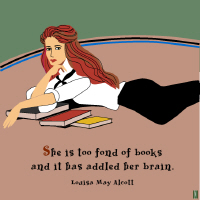
Don't you love the holidays? The perfect excuse to give such fun, goofy presents to family and friends (or yourself). Here are some stocking stuffer ideas for the literary in your life.
Jane Austen Action Figure. Just the thing for a writer's desk, to inspire prosody and whatnot. Of course, there's also the Bronte mousepad. Surely, those three stern faces exhorting you to write could get those fingers flying over your keyboard!
These Little Women gift cards are great.
The Disappearing Civil Liberties Mug. Pour in a hot beverage and watch your civil liberties disappear! For the environmentalist, consider the Global Warming mug.
Inspire your child with a Shakespeare infant bodysuit or a Bauedelaire hoodie.
If you really want to blow a literary geek's mind, buy one of these. Crass commercialism at its best!
And here are two awesome holiday ideas I purloined from BookGirl:
Great Author pot belly figure (the Shakespeare figure is my personal fave).
"I read Banned Books bracelet." What a way to accessorize.
12.04.2006
A literary anecdote
This weekend at a Berkeley cafe, I met a man who had met Jack Kerouac. (I think he overheard me talking about my recent reading of The Dharma Bums.) He said he met Jack Kerouac and Neal Cassady in Big Sur around '61 or '62, and he was surprised at how "physical" Kerouac was, "like a lumberjack."
He also said he Kerouac and Cassady punched and hugged each other a lot, so he thought there was a "homoerotic" relationship between them (what can I say? He's a psychiatrist.). He also mentioned that he knew Gary Snyder. He said Snyder used to collect seashells in his hat as a way to pick up women. I still can't figure out how he used seashells in his hat as a pickup line, but apparently, it worked.
Gotta love Berkeley!
He also said he Kerouac and Cassady punched and hugged each other a lot, so he thought there was a "homoerotic" relationship between them (what can I say? He's a psychiatrist.). He also mentioned that he knew Gary Snyder. He said Snyder used to collect seashells in his hat as a way to pick up women. I still can't figure out how he used seashells in his hat as a pickup line, but apparently, it worked.
Gotta love Berkeley!
12.01.2006
Holiday gift giving ideas
I like this gift idea from Salon:
Organize your friend's bookshelves -- by color, by size, by theme, or alphabetically, whatever she wants. Find a snowy Sunday, turn on "The Wedding Singer," "Prairie Home Companion" or the Ramones, and do the job your friend has always meant to do, but didn't have the time.
You can find an all-purpose, foolproof coupon to send, plus other ideas for bookworms here.
This is also cool: Designing your own book covers. Alas, couldn't find one for the USA Group.
And, not literary but oh-so-cool: Suburban Toile!
Organize your friend's bookshelves -- by color, by size, by theme, or alphabetically, whatever she wants. Find a snowy Sunday, turn on "The Wedding Singer," "Prairie Home Companion" or the Ramones, and do the job your friend has always meant to do, but didn't have the time.
You can find an all-purpose, foolproof coupon to send, plus other ideas for bookworms here.
This is also cool: Designing your own book covers. Alas, couldn't find one for the USA Group.
And, not literary but oh-so-cool: Suburban Toile!
11.30.2006
Thoughts for Thursday
BikeProf and Litlove have been making some incredibly brilliant observations about the meaning of suffering. Please check out their posts.
***
From the epilogue to Lives of Girls and Women, Alice Munro:
"People's lives, in Jubilee as elsewhere, were dull, simple, amazing and unfathomable—deep caves paved with kitchen linoleum."
***
Question to ponder: If you were a book, which one would you be?
***
From the epilogue to Lives of Girls and Women, Alice Munro:
"People's lives, in Jubilee as elsewhere, were dull, simple, amazing and unfathomable—deep caves paved with kitchen linoleum."
***
Question to ponder: If you were a book, which one would you be?
Subscribe to:
Posts (Atom)